How to Serve Pâté Choosing, Pairing and Presenting It Well
Putting together a charcuterie board sounds simple until you’re standing in front of a deli counter trying to decide which pâté actually belongs on it. Do you want something smooth and spreadable, or a coarser, rustic style with visible bits of meat and fat? Should it be mild enough for guests who’ve never tried it, or rich and assertive for people who already know what they like? These aren’t trick questions, but they trip up a lot of home cooks because pâté isn’t one thing. It’s a category, and choosing well means understanding what separates one style from another.
Start With the Texture, Not Just the Flavor
Texture tells you more about how a pâté will behave on a plate than flavor does. Smooth styles, like a classic liver pâté or a chicken liver mousse, have been finely processed and often lightened with butter or cream, giving them a soft, almost whipped consistency. They spread easily on bread or crackers without tearing, which makes them forgiving for a first-time host.
Rustic styles, like a country pork pâté, are coarser by design. You’ll see flecks of fat, herbs and sometimes pistachios or peppercorns folded through the mixture. These hold their shape better when sliced and tend to carry more textural contrast in each bite. Neither style is objectively better. The right choice depends on what else is on the table and what kind of eating experience you’re going for.
Choosing Pâté for an Appetizer
When pâté is the centerpiece of a starter course rather than one element among several, it can carry more personality. This is a good moment to reach for something with a stronger flavor profile, like a truffle-infused mousse or a foie gras terrine, since it won’t be competing with a dozen other components for attention.
When choosing pate for a mixed charcuterie board instead, restraint matters more. You’re building a spread where several items need to coexist, so a milder, well-balanced pâté often works better than something intensely flavored. Save the boldest options for when they can actually be appreciated on their own.
What to Serve Alongside It
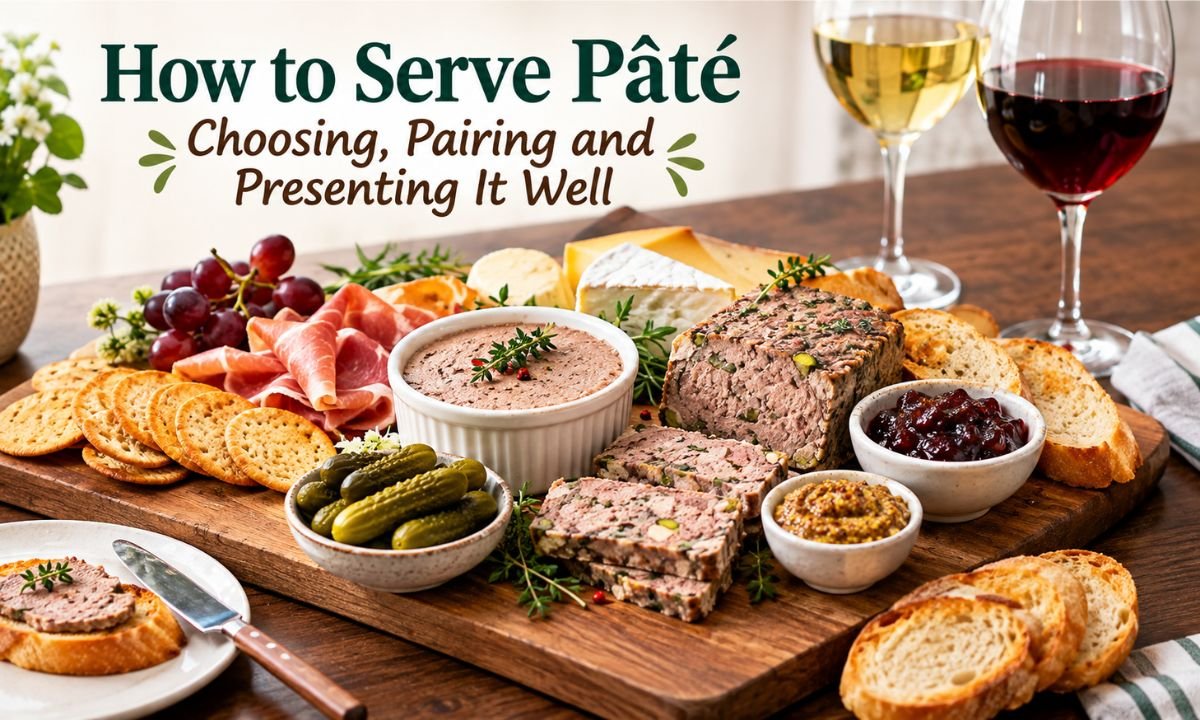
Bread and crackers are the obvious vehicle, but not all of them work equally well. A neutral baguette, sliced thin and lightly toasted, is the safest choice because it won’t fight with the pâté’s flavor. Toast points hold up better than soft bread if you’re dealing with a very smooth mousse, since they won’t collapse under the spread. Plain, sturdy crackers are a reasonable substitute if bread isn’t available, though overly seasoned or flavored crackers tend to clash rather than complement.
Cornichons are close to essential. Their sharp acidity cuts through the richness of pâté in a way few other accompaniments can match. Whole grain mustard is another reliable pairing, adding texture and a tangy bite that balances fattier styles like rillettes. Some cooks add a small spoonful of fruit preserve, particularly fig or onion jam, alongside richer terrines, since the sweetness offsets the density.
Portioning and Presentation
A common mistake is serving too much pâté per person, especially on a board with other proteins and cheeses. Two to three tablespoons per guest is generally plenty when it’s part of a larger spread, and that amount can stretch further if you’re offering more than one style.
Presentation matters more than people expect. Pâté served straight from its container looks unfinished. Turning it out onto a small plate or board, even briefly, gives guests a better sense of texture and makes portioning easier with a knife or spreader. If you’re serving a terrine, slicing a few pieces ahead of time and leaving the rest whole lets people see what they’re getting without committing everyone to the same portion size.
Letting pâté sit out for a short while before serving also improves the experience. Straight from the refrigerator, both flavor and texture are muted. A brief rest at room temperature softens rich, buttery styles just enough to make them easier to spread and more expressive on the palate. Exactly how long depends on the style and your kitchen’s temperature, so use judgment rather than a fixed rule, and keep food safety in mind if you’re serving a larger gathering over several hours.
Building a Full Charcuterie Board Around It
Pâté works best on a board when it’s given its own space rather than crowded next to sliced meats. A small ramekin or a cleared section of the board keeps it from smearing into other components. If you’re including more than one style, a gourmet pate with a distinct flavor, like one finished with truffle, pairs well next to a plainer, more familiar option, giving guests a way to compare without overwhelming their palate.
Balance the board with a few different textures beyond the pâté itself: something crunchy, something pickled, something sweet. This variety keeps the pâté from being the only rich element on the table, which matters if you’re also serving cured meats or aged cheese.
Pairing With Wine and Other Drinks
Pâté pairs well with wines that have enough acidity to cut through its richness. A crisp white, like a Sauvignon Blanc or a dry Riesling, works reliably across most styles. For richer terrines or foie gras, a slightly sweet wine, such as a Sauternes, is a traditional match precisely because the sweetness balances the density of the dish.
If wine isn’t the plan, a dry sparkling cider or even a light beer with some carbonation can serve a similar function, since the bubbles help refresh the palate between bites.
None of this requires precision. The goal is simply to avoid pairing something equally heavy or equally rich alongside pâté, since that combination tends to feel one-note rather than complementary.
Once you understand what separates a smooth mousse from a rustic terrine, and how much accompaniment each style actually needs, choosing and serving pâté stops being a guessing game. It becomes a matter of matching the right texture and intensity to the occasion in front of you.