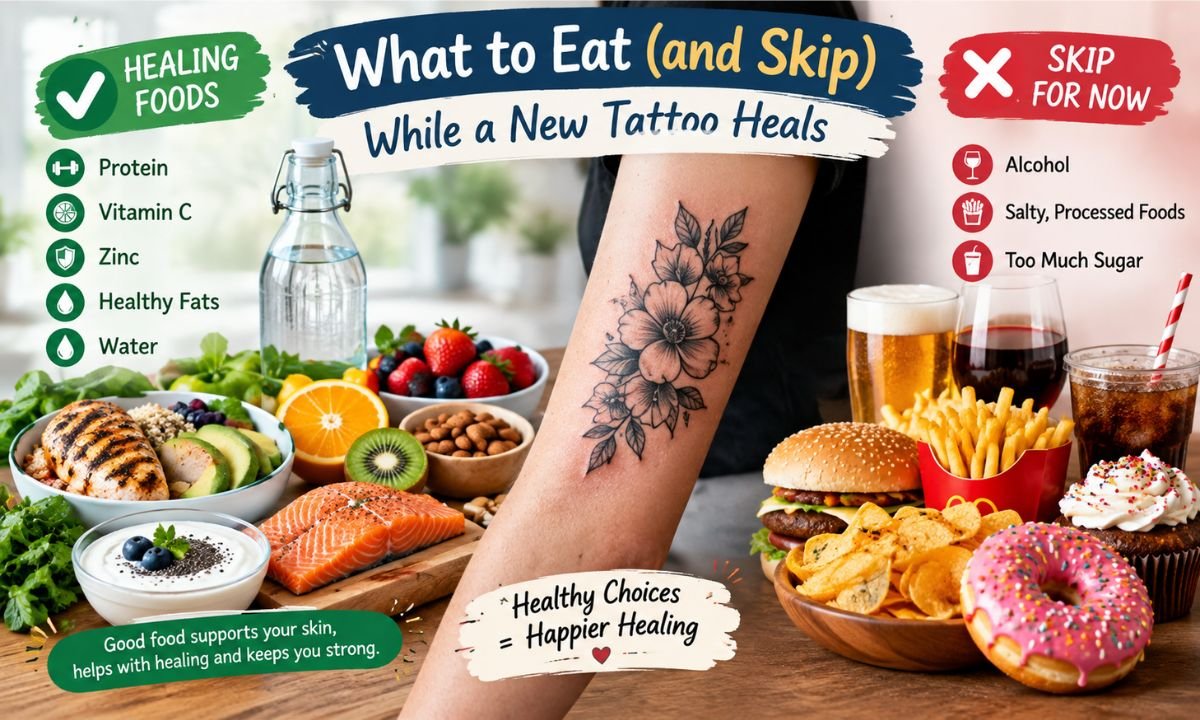
What to Eat (and Skip) While a New Tattoo Heals
A fresh tattoo is a controlled wound, and like any healing skin, it does best when your body has what it needs. Aftercare usually focuses on what goes on the tattoo: soap, balm, and sunscreen. What goes on your plate gets less attention, but a few simple food habits can support your skin in the two to four weeks it takes for the surface to heal.
Foods that support healing skin
Protein at every meal
Skin repair depends on protein. Eggs, Greek yogurt, chicken, fish, beans, lentils and tofu are easy ways to cover it. If you’re grabbing a quick bite, a grilled chicken bowl or a bean burrito beats fries and a soda.
Vitamin C
Vitamin C plays a role in making collagen, a key building block of skin. Citrus, strawberries, kiwi, bell peppers and broccoli are all great sources. A side salad with peppers or a fruit cup is an easy add-on to most menus.
Zinc
Zinc supports normal wound healing. You’ll find it in beef, poultry, pumpkin seeds, chickpeas and cashews.
Healthy fats
Salmon, avocado, olive oil, walnuts and chia seeds provide fats that help keep skin supple, which may make the itchy, flaky stage a little more comfortable.
Water, water, water
Hydrated skin heals more comfortably. Keep a water bottle handy and aim to drink steadily throughout the day.
What to cut back on for a couple of weeks
- Alcohol: it dehydrates you and can interfere with healing. Most artists recommend avoiding it for at least the first couple of days.
- Heavily salty, ultra-processed meals: they leave you dehydrated and puffy.
- Too much sugar: an occasional treat is fine, but a steady stream of sugary drinks won’t do your skin any favors.
Easy healing-friendly orders when you’re eating out
- Breakfast: egg and veggie wrap with fruit instead of hash browns
- Lunch: grilled chicken salad with peppers and avocado
- Fast casual: burrito bowl with beans, chicken, salsa and guacamole
- Dinner: salmon or steak with roasted vegetables
- Snack: Greek yogurt with berries, or a handful of nuts
Food is only half the plan
Good nutrition supports healing, but it doesn’t replace proper aftercare. Wash the tattoo gently, pat it dry, apply a thin layer of the balm your artist recommends, keep it out of pools and baths, and protect it from the sun. This day-by-day tattoo aftercare guide walks through what to expect from the first night to full healing, including when itching and peeling are normal.
Don’t forget sleep and movement
Your body does much of its repair work while you sleep, so aim for a full night’s rest during the first week. Light movement such as walking keeps circulation healthy, but skip heavy workouts that stretch or rub the tattooed area, and wipe away sweat gently if you do exercise.
When to call a professional
Some redness and tenderness in the first few days is normal. Spreading redness, increasing pain, pus, fever, or a rash beyond the tattoo are not. Contact your artist and a doctor if you notice any of these.
The takeaway
You don’t need a special diet to heal a tattoo. Eat enough protein, add colorful fruits and vegetables, drink plenty of water, and go easy on alcohol for a while. Pair that with good aftercare, and your new ink will heal clean and bright.
This article is for general information and isn’t medical or nutritional advice.