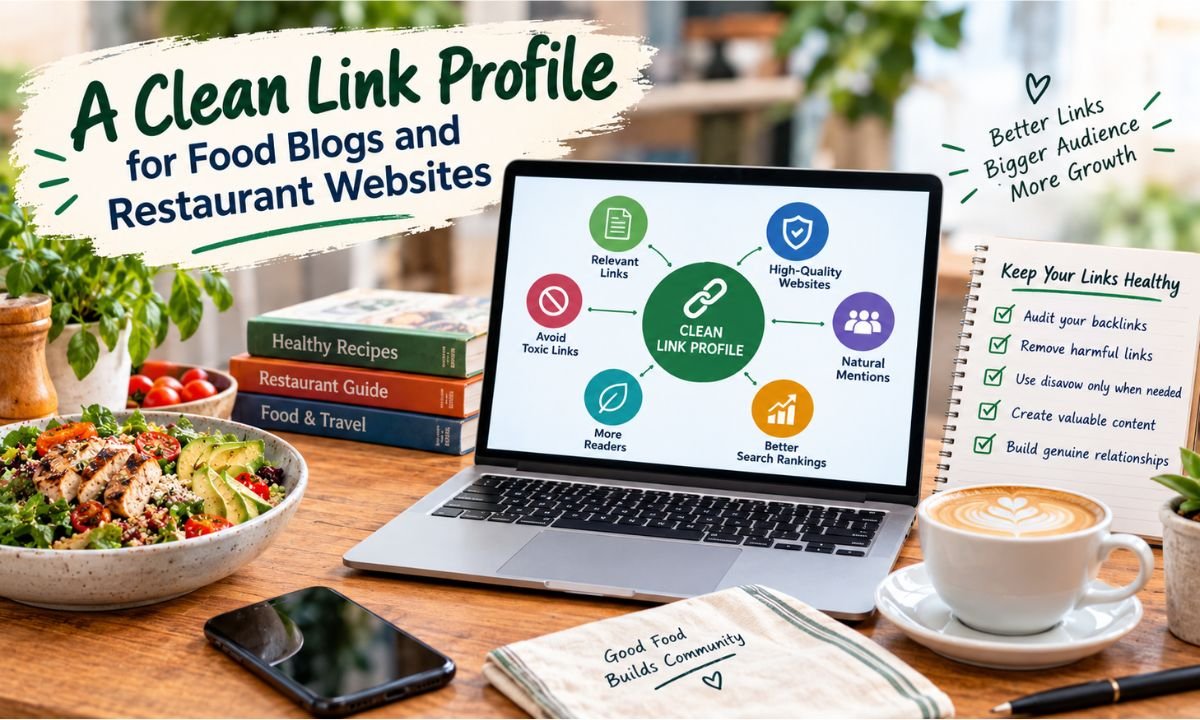
A Clean Link Profile for Food Blogs and Restaurant Websites
A food website depends on trust. Readers want reliable recipes, clear menu details and useful local information; search engines also look for signals that a site is credible. For a restaurant, food business or recipe publisher, backlinks can help people discover your pages—but links built through manipulative schemes can create problems. The aim is not to erase every imperfect link. It is to understand which links may pose a genuine risk and respond carefully.
What makes a backlink toxic?
A backlink is a link from another website to yours. Some links arise naturally when a food writer cites a recipe, a local guide lists a restaurant, or a supplier mentions a business. Others are created to influence rankings rather than help readers. Examples include paid links intended to pass ranking credit, large-scale link exchanges, and links from networks of sites built mainly to manipulate search results.
The word “toxic” is often used by SEO tools to describe links they consider suspicious. It is not, by itself, a Google penalty notice. A site with links from unrelated or low-quality pages is not automatically in trouble, and a tool’s score should not be treated as a verdict. Search engines assess patterns and context, not just whether a domain looks unattractive in a report.
For example, a small food blog might receive a link from an old directory with sparse information. That link may be useless, but it does not necessarily indicate a scheme. A sudden cluster of keyword-rich links from unrelated sites, on the other hand, deserves closer inspection—especially if the site owner or an SEO provider arranged them.
Audit before taking action
Start by collecting backlink data from Google Search Console and, if useful, a reputable SEO platform. Treat these sources as lists to investigate, not as automatic removal instructions. Look at the pages linking to you, the surrounding text, the linking site’s purpose and whether you or someone working for you had a role in acquiring the links.
Consider questions such as:
- Does the page have a real audience or useful purpose beyond linking to other sites?
- Is the link relevant to food, dining, your location or another genuine topic?
- Does the anchor text read naturally, or is it an exact-match phrase repeated across many sites?
- Was the link bought, exchanged at scale or placed through a network?
- Is there evidence of a manual action in Search Console?
Keep a record of the domains and pages you review, the reason for each decision and any outreach you make. This helps prevent a rushed response to a noisy report and gives you a clear history if you need to revisit the audit.
Request removal, then consider disavowal
If you identify links that you or a previous provider arranged in violation of search engine guidelines, first try to have them removed. Contact the site owner using a business email or contact form, identify the specific page and link, and make a concise request. Save copies of messages and note when you sent them. Avoid paying a removal fee without careful consideration; the request itself should be straightforward.
Google’s disavow tool is a more advanced measure, not a routine way to tidy a backlink report. It tells Google to ignore specified links when assessing your site. Using it carelessly can discount links that are harmless or beneficial. It is generally worth considering when there is a substantial pattern of manipulative links that you cannot remove, or when a manual action related to unnatural links requires remedial work. Review the toxic backlink guide for a detailed explanation of evaluating suspicious links, requesting removals and deciding whether disavowal is appropriate.
If you do use the tool, check Google’s current instructions, prepare the file carefully and retain a copy of your audit. Disavowing individual links based only on a third-party “toxicity” label can create unnecessary risk. When the history is complicated or a manual action is involved, an experienced SEO professional can help assess the evidence before changes are submitted.
Build a healthier link profile
Prevention is more useful than repeated cleanup. Publish pages that are genuinely worth citing: tested recipes with clear instructions, thoughtful guides to local dining, accurate menus, useful dietary information or original reporting. Build relationships with food writers and community organisations through relevant work, not mass requests for keyword-focused links. If you hire help for content, design or marketing, agree on the work and ask how any proposed links will be earned.
Freelance marketplaces can make it easier to find specialists for distinct tasks, such as editing a recipe collection or improving a restaurant’s site content. For instance, Osdire offers freelance services across areas including writing, design and marketing, with flat pricing and payment held until delivered work is approved. Whichever route you choose, judge providers by the quality and transparency of their process—not by promises of a particular number of backlinks.
A sound link profile is not perfectly polished; it reflects real mentions and useful relationships over time. For food businesses and publishers, a measured audit protects that foundation better than panic-removing every unfamiliar link. Focus on evidence, address links tied to manipulative activity, and keep earning attention by making pages readers are glad to find.