Coffee Cup Sizes Explained What 8, 12, 16, and 20 oz Really Mean for Your Menu
Order a “medium” coffee at three different shops, and you may get three different amounts. One hands you 12 ounces, another 14, another 16. The names on the menu board are marketing. The number that matters is printed on the bottom of the cup.
If you run a coffee shop, a juice bar, or any restaurant with a drinks menu, cup size is one of the quieter decisions that shapes your costs, your recipes, and how customers judge value. This guide explains how cup sizes work and how to choose a lineup that fits your menu.
How Cup Sizes Are Measured
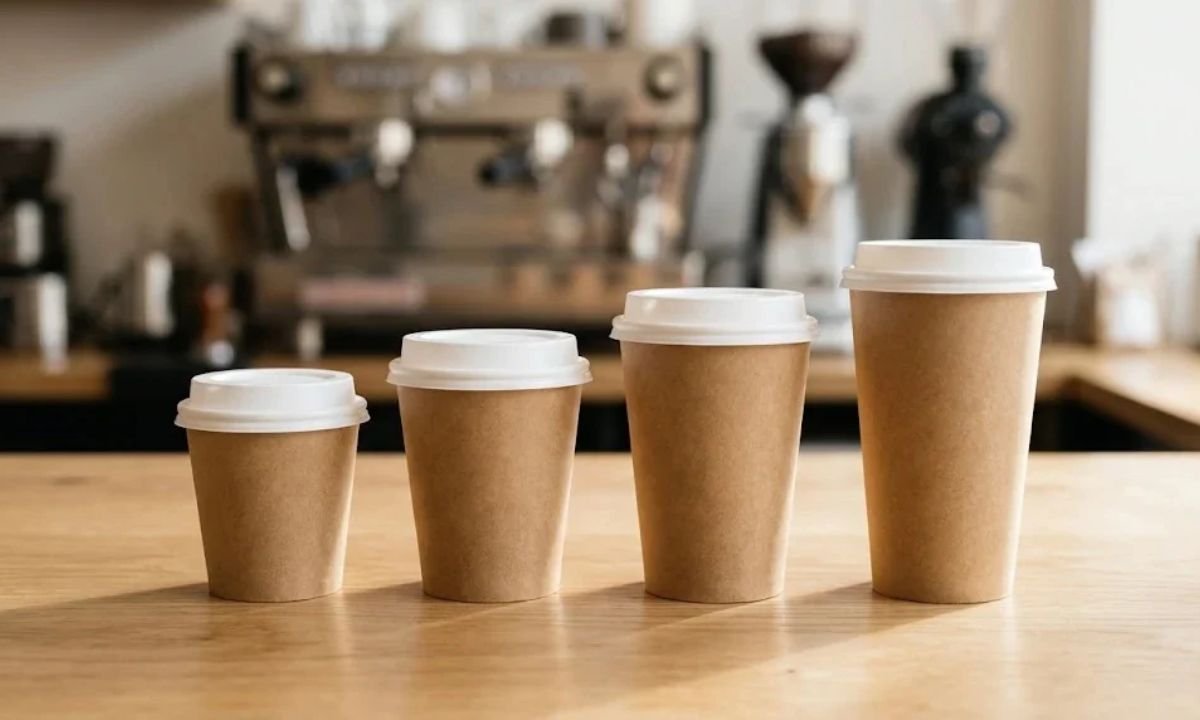
Paper cups in the U.S. are named in fluid ounces. One U.S. fluid ounce is about 29.57 milliliters, so the common sizes convert like this:
- 4 oz: about 118 mL. Espresso, samples, tastings
- 8 oz: about 237 mL. Small coffee, flat white, cortado
- 12 oz: about 355 mL. Standard small or medium hot drink
- 16 oz: about 473 mL. Medium or large latte, iced coffee
- 20 oz: about 591 mL. Large hot drink
- 24 oz: about 710 mL. Large iced drink
One detail catches many new owners out. The size name refers to the cup filled to the brim, not the amount of drink you can actually serve. A 12 oz cup with a lid, a layer of milk foam, and room to carry it safely holds closer to 10 or 11 ounces of liquid. Iced drinks lose even more space to ice.
What the Big Chains Call Their Sizes
Chain menus are the reference point most customers carry in their heads, so it helps to know them.
- Starbucks uses Short (8 oz), Tall (12 oz), Grande (16 oz), and Venti (20 oz hot, 24 oz iced).
- Dunkin’ hot drinks run Small (10 oz), Medium (14 oz), Large (20 oz), and Extra Large (24 oz).
Notice that a Dunkin’ small is larger than a Starbucks short, and a Starbucks “tall” is the second-smallest size on its menu. There is no industry rule for what small, medium, and large mean. You are free to set your own, as long as the recipes and prices behind them make sense.
How Many Sizes Should You Offer?
More sizes are not better. Every extra size means another sleeve of cups in storage, possibly another lid, another recipe to train and another line on the menu board.
Most independent shops do well with three hot sizes. A common setup is 8, 12, and 16 oz. The 8 oz suits espresso-based drinks where the coffee flavor should lead, the 12 oz is the everyday seller, and the 16 oz gives customers a “large” without drowning the espresso in milk.
For iced drinks, 16 and 24 oz are the usual pair, because ice takes up roughly a fifth to a third of the cup.
If you want a single reference for every size from 4 to 32 oz, with milliliters, rim diameters, and typical uses side by side, this paper cup size chart lays it all out in one table and includes a converter for working out which cup fits a given drink.
Build Your Recipes Around the Cup
Cup size and recipe should be decided together. A latte recipe written for a 12 oz cup tastes weak if you simply pour more milk to fill a 16 oz one. Decide the number of espresso shots for each size first, then check that the finished drink fits with room to spare.
A simple way to plan:
- Write down the finished volume of each drink, including milk, foam, ice, and toppings.
- Add headspace: about 10 percent for a plain hot drink with a flat lid, and 20 to 30 percent for foam, ice or whipped cream.
- Pick the smallest cup that holds the total.
These percentages are planning estimates. Always test with your real recipe before printing a menu.
Do Not Forget the Lid
Lids are matched to the rim diameter of the cup, not to its ounce size. This matters more than it sounds.
Many suppliers make their 12, 16, and 20 oz hot cups with the same rim, commonly 90 mm, so one lid fits all three. That is a real saving in storage and in speed at the bar. An 8 oz cup often has a smaller 80 mm rim and needs its own lid.
Rim sizes are not universal across brands, though. Two cups both labeled “12 oz” from different manufacturers can have slightly different rims. A lid that almost fits is the main cause of spills. Whenever you change cup suppliers, order samples and test the lids before committing.
Single Wall, Double Wall or Ripple Wall?
Size is only half the choice. The wall construction decides how the cup feels in the hand.
- Single wall cups are the lightest and cheapest. They work for cold drinks, water and warm drinks, but hot coffee usually needs a sleeve.
- Double wall cups have a second layer of paper with an air gap. They insulate well enough that most customers do not need a sleeve.
- Ripple wall cups have a corrugated outer layer. They give the best grip and heat protection, and feel the most premium.
A sleeve costs money and takes a second to fit, so compare the price of a single wall cup plus sleeve against a double wall cup before you decide.

Hot Cups and Cold Cups Are Not the Same
It is tempting to use one cup for everything, but hot and cold drinks ask different things of it.
Paper cups are the standard for hot drinks. The paper is lined on the inside so it holds liquid, most often with a thin layer of PE plastic or with PLA, a plant-based alternative. Ask your supplier which lining a cup uses, because it affects how the cup should be disposed of in your area.
Cold drinks are often served in clear plastic cups, usually PET, because customers like to see the layers of an iced latte or a fruit drink. Paper cups also work for cold drinks, although condensation can soften a thin single-wall cup if the drink sits for a long time. If you sell a lot of iced drinks to go, a clear cold cup in 16 oz and a paper hot cup in 12 oz will cover the bulk of your orders.
Cold cup lids come in their own rim sizes, so do not assume a hot cup lid will fit.
How Cup Size Affects Your Prices
Cup size is also a pricing tool. The cost of a larger drink rises slowly, since the extra ingredients are mostly milk, water, or ice. The price customers will pay rises faster. That is why the largest size on most menus is the most profitable one.
A few points are worth working through when you set prices:
- Keep the steps between sizes even. Jumps of 4 oz, such as 8, 12, and 16, are easy for customers to understand and make each upgrade feel worthwhile.
- Price the upgrade low. A small step up in price to the next size encourages customers to trade up, and the extra cost to you is usually a few cents.
- Watch the espresso ratio. If the large size needs an extra shot to taste right, build that into the price.
- Count the packaging. A bigger cup, lid, and sleeve cost slightly more, so include them when you work out your margin on each size.
Review your sales after a month. If one size barely sells, drop it and simplify the menu.
When Branded Cups Make Sense
A cup is the one piece of your shop that leaves with the customer and gets carried down the street. Printing your logo on it is among the cheapest forms of advertising a coffee shop can buy.
Custom printing is ordered in bulk, and the minimum quantity, price, and lead time depend on the size, the number of colors, and the wall type. A few tips before you request a quote:
- Settle your sizes first. Changing from 12 oz to 14 oz after printing means starting again.
- Keep one design across all sizes so the artwork can be reused.
- Ask for a sample or printed proof and check the color against your brand.
- Order lids from the same source or confirm the rim size in writing.
Manufacturers such as EcoLeaderPack supply custom printed paper cups in single, double and ripple wall versions from 7 to 22 oz, along with matching lids and sleeves, which keeps the whole set consistent.
Key Takeaways
- Cup sizes are named by brim-full volume. Usable volume is lower once you add foam, ice, and a lid.
- Small, medium, and large have no standard meaning. Define them for your own menu.
- Three hot sizes and two iced sizes cover most menus.
- Write recipes and choose cups together.
- Match lids by rim diameter and test them with samples.
- Choose the wall type based on how hot the drink is and whether you want to use sleeves.
FAQs
How many milliliters is a 12 oz coffee cup?
About 355 mL when filled to the brim. With a lid and some headspace, expect to serve around 300 to 330 mL.
What is the most popular coffee cup size?
For hot drinks, 12 oz is the most common everyday size in U.S. coffee shops, with 16 oz close behind.
Can I use the same lid for different cup sizes?
Often yes. Many 12, 16, and 20 oz hot cups share a 90 mm rim. Check the rim diameter with your supplier and test a sample.
Is a double-wall cup worth the extra cost?
For hot takeaway drinks, it usually is, because you no longer need a separate sleeve and the cup is more comfortable to hold.