Molcajete, Comal, and Olla How to Read the Cookware on a Mexican Menu
Mexican restaurant menus are full of words that describe how a dish was made, not just what’s in it. “Molcajete salsa,” “tortillas hechas en comal,” and “frijoles de olla” all name traditional cookware, and each tool changes how the food tastes and looks when it reaches your table.
Once you know what these tools are, you can read a Mexican menu like a regular. You’ll know which dishes arrive sizzling, which salsas are made fresh to order, and why some beans taste better than others. Here’s a guide to the cookware you’ll see named on menus, what each piece does, and what to expect when you order.
Molcajete: the stone bowl behind fresh salsa
The molcajete is a bowl carved from volcanic stone, used with a stone pestle called a tejolote. Cooks use it to grind chiles, garlic, tomatoes, and spices into salsas and pastes.
The rough stone crushes ingredients instead of chopping them. That releases more oil and aroma than a blender, which is why salsa “made in the molcajete” often tastes fresher and more rustic, with a chunky texture.
What to expect on the menu:
- Salsa de molcajete: a fresh table salsa, often made with charred tomatoes and chiles.
- Molcajete mixto: a hot stone bowl filled with grilled meats, cheese, nopales, and salsa. It arrives bubbling because the stone holds heat for a long time, so wait a minute before you dig in.
- Guacamole de molcajete: guacamole mashed and served in the stone bowl, sometimes right at the table.
Comal: the flat griddle for tortillas
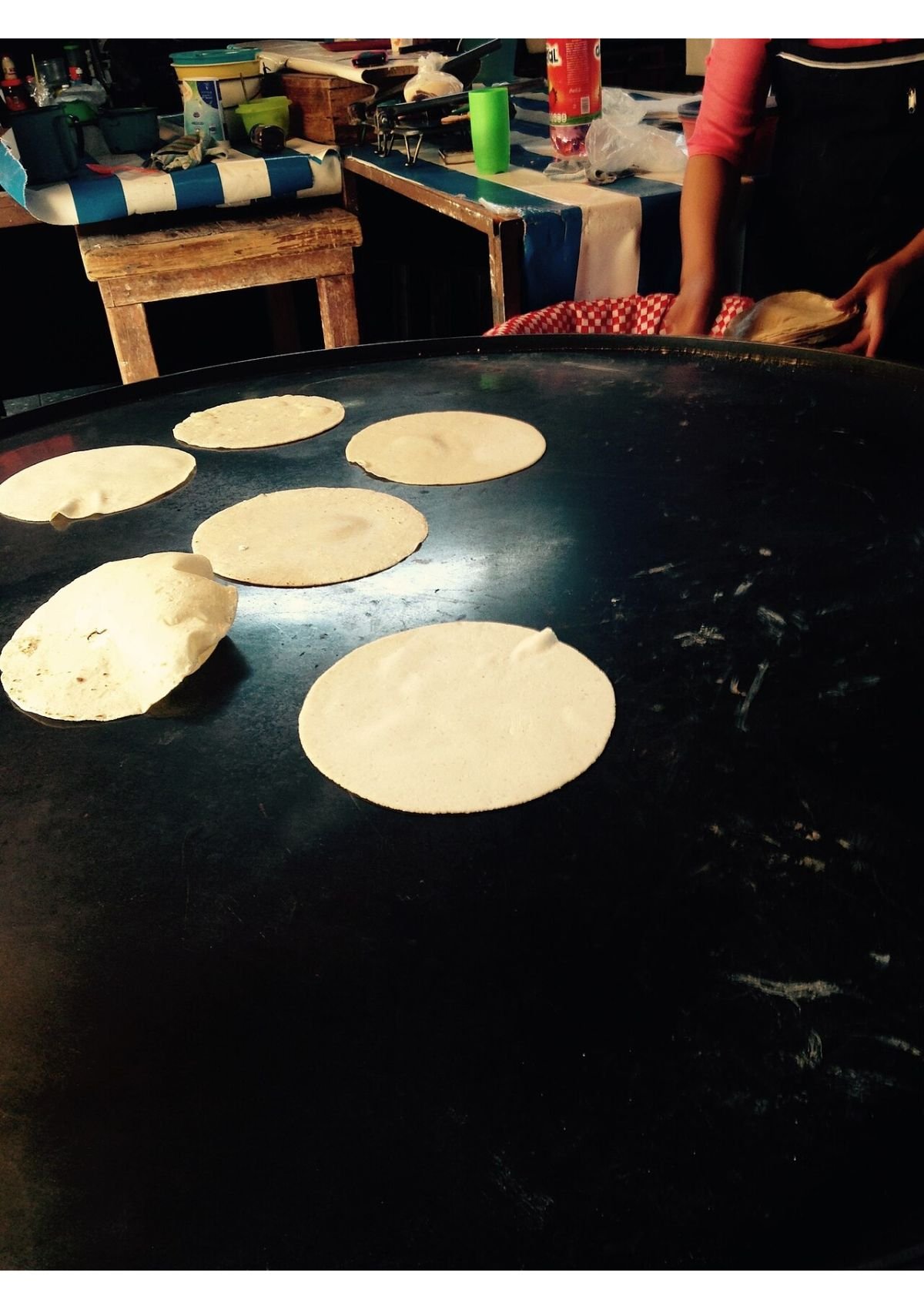
The comal is a flat, round griddle made of cast iron, carbon steel, or clay. It’s the go-to tool for warming tortillas, toasting dried chiles, and charring tomatoes, onions, and garlic for salsa. Because it has no sides, cooks can flip tortillas quickly by hand.
When a menu says tortillas are “made to order on the comal” or “hechas a mano,” it means they’re cooked fresh on that hot surface. Look for light brown spots and a soft, slightly puffy texture. Fresh comal tortillas are one of the clearest signs that a kitchen takes its Mexican food seriously.
Tortilla press: why handmade tortillas taste different
A tortilla press is a hinged metal or wooden tool that flattens balls of masa into even, round tortillas. It’s fast and makes tortillas the same thickness every time.
Restaurants that press their own tortillas often list “handmade tortillas” or “tortillas de maíz hechas en casa” on the menu. Compared with packaged tortillas, they’re softer, more fragrant, and taste more of corn. If you see a small upcharge for handmade tortillas, it’s usually worth it.
Olla de barro: the clay pot for beans and coffee
The olla de barro is a clay pot used for slow-cooking beans, stews, and drinks. “Frijoles de olla” are beans simmered in this pot with onion, garlic, and herbs, then served in their broth instead of refried. Clay heats gently and evenly, and many cooks say it adds an earthy flavor.
The same pots are used for café de olla, a spiced coffee made with cinnamon and piloncillo. If you see it on a breakfast or dessert menu, order it. It’s sweet, warming, and very different from regular drip coffee.
For anyone thinking about buying clay cookware for home, the FDA explains why it’s important to choose lead-free pottery in its questions and answers on lead-glazed traditional pottery.
Cazuela: the clay dish for mole and baked plates
A cazuela is a wide, shallow clay dish. It’s used for moles, rice, and baked dishes that go from oven to table. On a menu, “en cazuela” usually means the dish is served in its own clay dish, which keeps it hot longer. It’s common with queso fundido, baked enchiladas, and seafood stews.
Metate: the grinding stone behind masa and mole
Before electric mills, masa and mole started on a metate, a flat or slightly curved stone slab used with a stone roller called a mano. Cooks kneel or stand over it and grind soaked corn, chiles, seeds, and cacao by hand.
Few restaurants grind everything on a metate today, because it takes time and strength. But some kitchens still use one for special moles or for chocolate, and a few list “molido en metate” on the menu. When you see it, expect a slightly coarser texture and a deeper, toastier flavor than a sauce made in a blender.
The metate is also why Mexican chocolate tablets feel a little gritty. Traditional chocolate is ground with sugar and cinnamon on the stone, and the sugar never fully dissolves. That texture is part of the charm when you drink it as hot chocolate or champurrado.
Comal vs. plancha: what’s the difference?
You may see both words on a menu. A comal is a round, flat griddle traditionally heated over a flame and used mostly for tortillas, chiles, and charring vegetables. A plancha is a larger flat-top griddle, like the one in most restaurant kitchens, used for searing meats, cooking eggs, and making quesadillas in volume.
In practice, many restaurants use the plancha for proteins and keep a comal for tortillas. “A la plancha” on a menu usually means the meat or fish was seared on the flat-top, while “en comal” points to tortillas, chiles, or a dish cooked the traditional way.
Small tools you’ll notice at the table
A few smaller pieces show up on menus or at the table:
- Tortillero: an insulated basket or cloth pouch that keeps tortillas warm while you eat.
- Molinillo: a carved wooden whisk used to froth Mexican hot chocolate. “Chocolate batido a mano” means it was whisked with one.
- Lime squeezer: a hinged press for juicing limes fast, used for salsas, aguas frescas, and micheladas.
Clay, stone, or cast iron: which lasts longest?
Each material has its strengths. Volcanic stone, used for molcajetes and metates, lasts for generations if it’s kept dry and never washed with soap. Cast iron and carbon steel comales are nearly indestructible, heat quickly, and are the easiest choice for everyday tortillas. Clay ollas and cazuelas give the most traditional flavor, but they need gentle heat, slow temperature changes, and careful handling to avoid cracks.
For most home cooks, a good plan is a cast iron comal for daily use, a stone molcajete for salsa, and one clay olla for beans and café de olla. That mix covers almost every dish you’ll see on a Mexican menu, and each piece gets better with use.
How to order like a regular
Now that you know the tools, a few simple habits help you get the most out of a Mexican menu:
- Ask how the tortillas are made. If the kitchen presses them in-house and cooks them on a comal, order a dish where the tortilla is the star, like tacos or quesadillas.
- Order the molcajete salsa when it’s offered. It’s usually made in small batches, and the flavor changes with the chiles of the day. Ask how hot it is before you pile it on.
- Share a molcajete mixto. It’s built for two or more people, and the hot stone keeps the food warm through the whole meal.
- Choose frijoles de olla when you want something lighter. They’re whole beans in broth, so they’re less rich than refried beans and pair well with grilled meats.
- Finish with something from the olla. Café de olla or Mexican hot chocolate whisked with a molinillo is a simple, traditional way to end the meal.
If a menu doesn’t explain a term, ask your server. Most kitchens are proud of the tools they use and happy to explain the difference.
Bringing the tools home
You don’t need a full kitchen of new equipment to cook Mexican food at home. A comal and a tortilla press cover most weeknight cooking, and a molcajete takes salsa and guacamole to the next level.
If you want to try the real thing, you can shop for authentic Mexican cookware online and build your collection one piece at a time. Season a new molcajete by grinding raw rice a few times until the grit is gone, and season clay pots before their first use.
FAQ
What does “molcajete” mean on a Mexican menu?
It means the dish or salsa was made or served in a molcajete, a volcanic stone bowl. Molcajete salsas are hand-ground, and a “molcajete mixto” is a sizzling stone bowl of grilled meats and salsa.
What is a comal used for?
A comal is a flat griddle used to cook tortillas and to toast chiles, tomatoes, onions, and garlic for salsa.
What are frijoles de olla?
They’re whole beans slow-cooked in a clay pot with onion, garlic, and herbs, and served in their broth instead of mashed and refried.
What is the difference between a molcajete and a metate?
A molcajete is a deep stone bowl used to grind salsas and serve hot dishes. A metate is a flat grinding stone used with a roller to grind corn, chiles, seeds, and cacao for masa, mole, and chocolate.
Is a molcajete hard to take care of?
Not really. Season a new one by grinding raw rice until the grit is gone, rinse it with water after each use (no soap), and let it dry completely before you put it away.